

How Nobles Lived & Lied
The Last Lion | Prologue: Land of Hope & Glory (Pages 78–91) by William Manchester

The Aristocratic Stage
The English upper class did not labor. They paraded.
Doctors and solicitors might be invited to dinner, but never as equals. The elite kept to their own — a small, select body that Churchill later called “brilliant and powerful.”
What did this brilliance look like? Not invention. Not sweat. They passed the port, the sherry, the claret. They played billiards, watched cricket, hunted grouse until two thousand fell in a single shoot.
Their conversation was thin — “stupid and insipid,” as one critic put it. They had wealth, not wit. Their kingdom was appearances, not ideas.
Society reinforced the lie with a rhyme every child heard:
“The rich man in his castle,
The poor man at his gate,
God made them high and lowly,
And orders their estate.”
It was not faith. It was indoctrination.
The rhyme sanctified the chain of command.
Nobility as Symbol
By the late 19th century, the nobility was no longer necessary, yet they endured.
Anachronisms draped in silk.
Even the brightest among them knew it.
Still, their presence carried weight. The masses had been trained to accept the saddle and bow, to sing hymns that sanctified hierarchy. Nobility became not flesh and blood but “a effigy of mind.”
It was a performance. Dukes paraded as visible emblems of order, the proof that England still had guardians. Their arrogance was despised — Clare Booth Luce called them smug beyond redemption — yet society swallowed the illusion.
Inheritance sealed it. Primogeniture funneled estates to eldest sons, while the rest scattered into the navy, the army, the church, or diplomacy. Rank became ritual, not achievement. Status was protected even when the substance rotted.
The ruling class did not lift a finger, but they never lost their place.
Birth was their armor.
Totem was their sword.
The Season & the Show
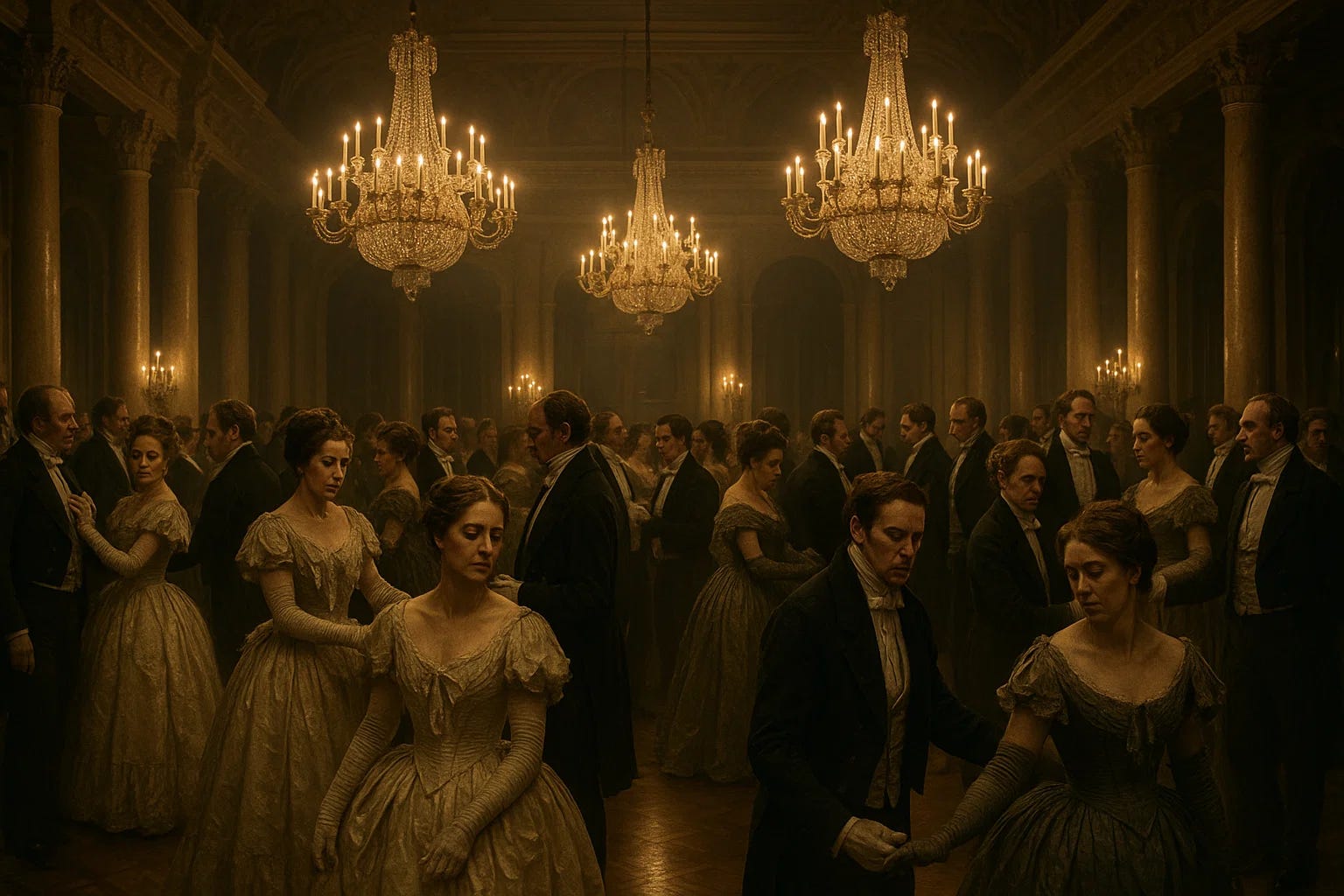
Every year the upper class lived for “the Season” — that whirl of races, balls, and Parliament sessions that turned London into their private stage.
It wasn’t just leisure. It was ritualized power. The carriages, the liveried footmen, the ladies in ostrich feathers and gowns off the shoulder — all of it screamed hierarchy. To attend was to be seen. To miss it was to be forgotten.
Parliament itself mirrored the theater.
Opening sessions looked more like family reunions than political gatherings. Landed sons filled the Commons, peers filled the Lords, and cousins by blood or marriage tied the system together in an endless loop of inheritance and nepotism.
The ruling class insulated itself behind gates and gardens, but their dominance was never passive. They wielded Parliament as casually as they wielded champagne flutes, ensuring that every viceroy, governor, and minister came stamped with their lineage.
For them, politics was not governance. It was continuity. The survival of privilege disguised as the machinery of state.
Gentlemen & Education
The aristocracy clung to one unshakable identity: they were gentlemen. Titles, estates, and privilege flowed from birth, but the true badge was education — or at least the masquerade of it.
Oxford and Cambridge were their finishing schools. For those who didn’t make it, the public schools like Eton, Harrow, and Rugby became the boot camps of the ruling class. These weren’t just classrooms. They were training grounds for discipline, hierarchy, and endurance. The curriculum was Latin, Greek, cricket, and pain. The Duke of Wellington himself declared that the battle of Waterloo had been won on the playing fields of Eton.
The lesson was simple: produce a boy who could be flogged, drilled, and hardened into a man who carried the “inner check” — the invisible restraint that separated rulers from the ruled.
But the definition of a gentleman was slippery. In one village, it could mean a lawyer, a doctor, or a country squire. In London, the bar was higher. Money alone wasn’t enough; manners, bearing, and vocabulary became the true currency. A misplaced word or an anxious gesture could strip a man of his standing faster than debt.
This was the paradox of the Victorian gentleman: absolute power mixed with crippling insecurity. They lived under constant judgment, terrified of being dismissed as a swot, a bore, or worst of all — not a gentleman at all.
Great Houses & Shrines
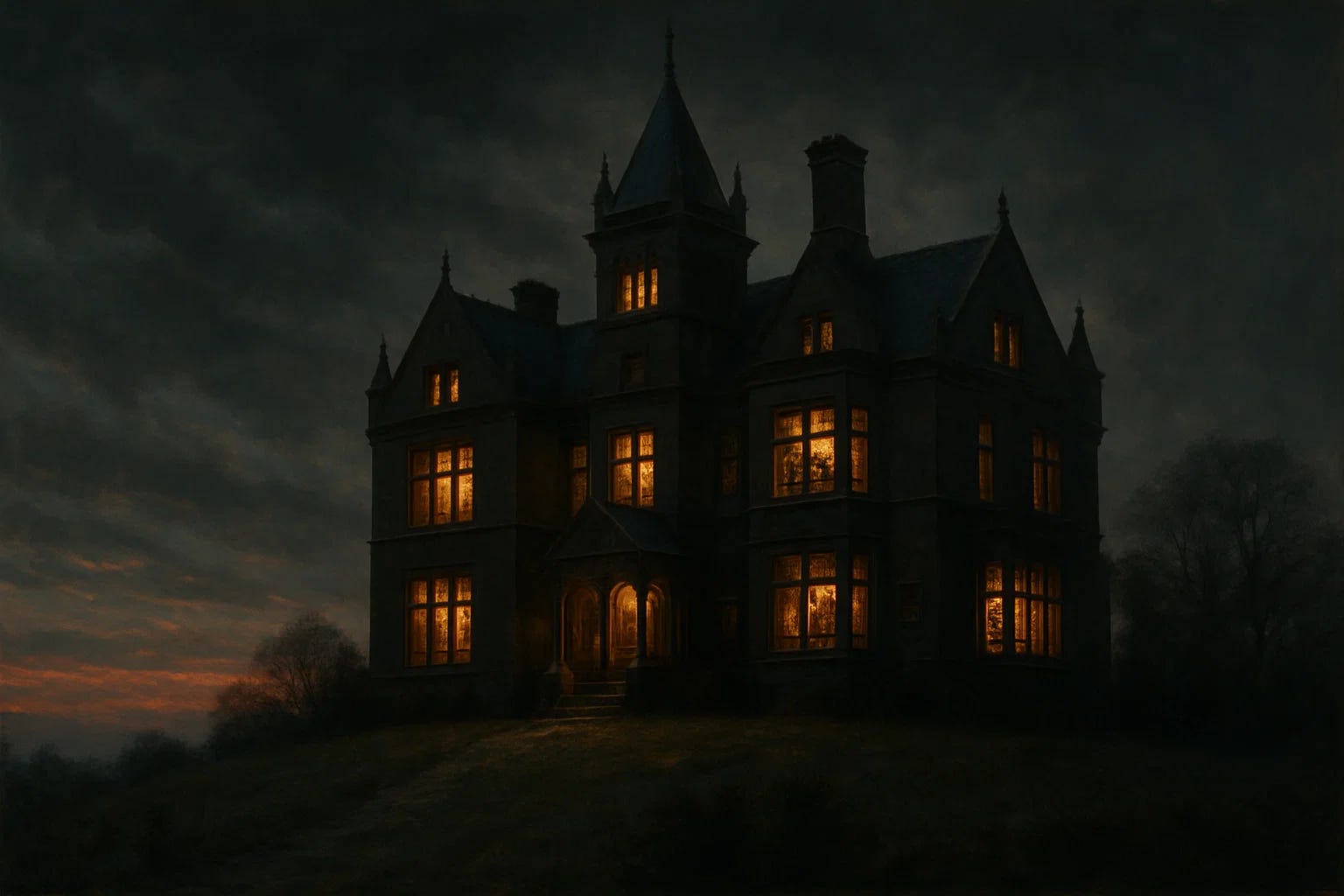
The aristocracy did not just live in homes. They lived in monuments. Their estates rose like fortresses across the countryside — castles, manors, halls — each one a shrine to bloodline and permanence.
These houses were more than dwellings. They were weapons of memory. Towers and battlements declared victory across generations. Drawing rooms stuffed with portraits, coats of arms, and relics whispered one message: we have always been here, and we always will be.
They had no need to invent, to build industries, or to break sweat. Their power was frozen in stone. Guests walking through their halls were not just visiting a family. They were stepping into a living history that insisted on its own inevitability.
Even in decline, the nobility wielded their houses like scepters. A roof might leak, fortunes might wither, but the symbolism endured. The common man could save, strive, and claw, but he would never inherit the castle on the hill.
To challenge such permanence required more than rebellion. It required time itself.
Sexual Hypocrisy
The nobility preached restraint while practicing indulgence. Affairs were currency. Dukes, duchesses, generals, and hostesses all traded in them.
In an earlier age, aristocrats flaunted their excess — Byron with his lovers, Marlborough with his mistresses, Wellington with his conquests. By Victoria’s reign, propriety pushed desire underground, but it never vanished. It simply became ritualized.
Affairs were managed like banquets. Lovers were scheduled. Hostesses arranged couplings with the same tact they used for dinner parties.
Promiscuity was wrapped in etiquette.
Everyone in the household knew. Servants carried the knowledge — the whispers, the sighs behind closed doors. They lived under the double standard: morality for the middle class, license for the elite.
Only legitimacy mattered. The firstborn heir had to be unquestionably true. Everything else could be masked with tact, or muffled with silence. And when discretion was not enough, there was always invention: Dutch cups, lemon-soaked sponges, “French letters.” Practicality beneath hypocrisy.
Respectability on the surface.
Lust in the shadows.
Endless Carnival
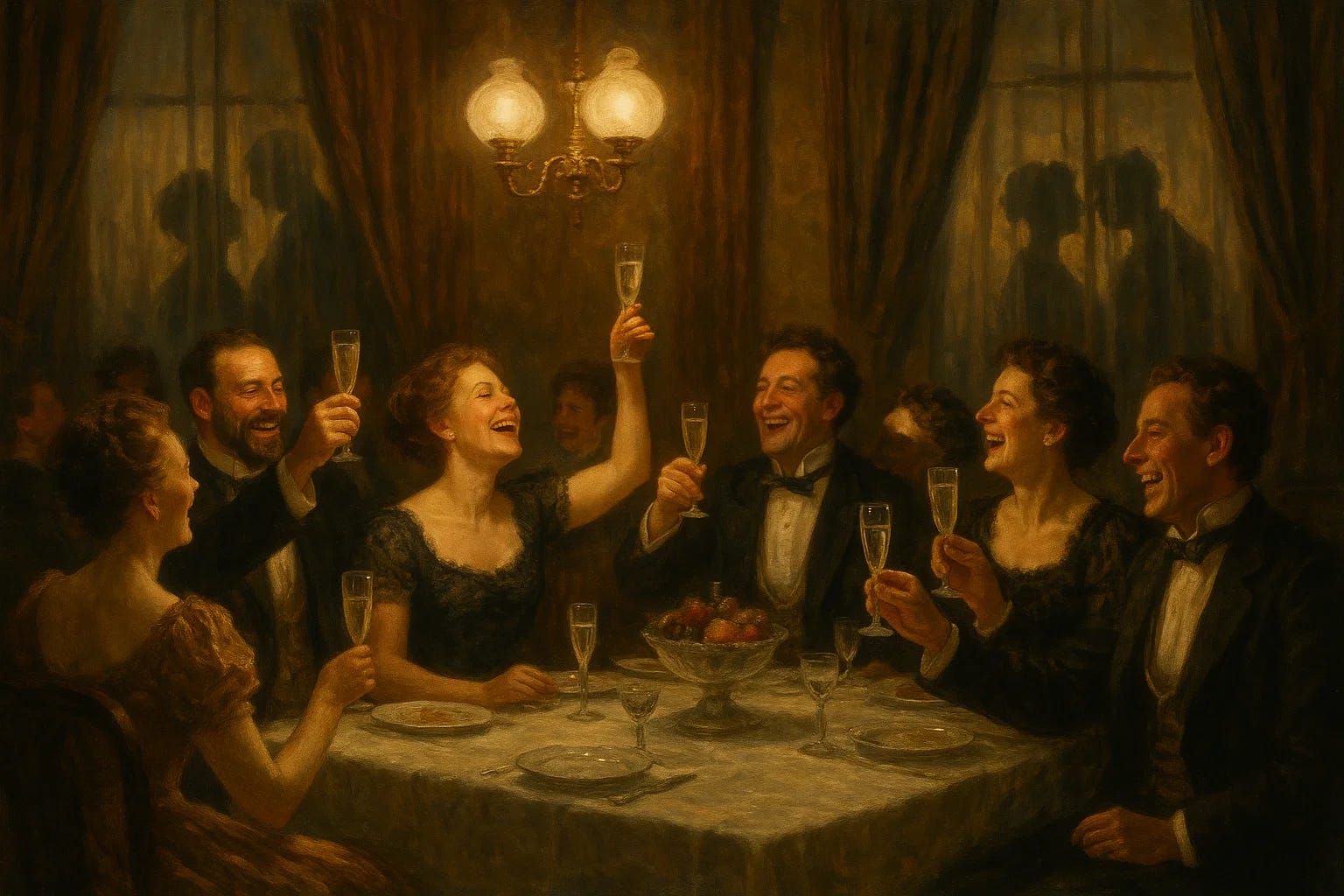
For the aristocracy, life blurred into spectacle.
Every night was a theater of fraud.
Women dazzled in ballrooms and hunts, bold and athletic, their gowns cut to display as much as to conceal. They lived as ornaments and predators, trained to charm, tease, and conquer.
Affairs weren’t accidents. They were the game itself. Hostesses arranged them as carefully as seating charts. The key was discretion: keep it quiet, keep it clever, keep it from staining the heir.
But even the best choreography cracked. One Frenchwoman, spurned by her lover, flew into rage. She tore the veil off propriety, and in that flash the mask dropped — revealing what everyone knew but never spoke.
Respectability was costume.
Beneath it, rot and rut dressed as carnival.
Ah, yes: "Publish and be damned!"
Great stuff, Darius!